You can make a difference
We all want to feel like we’re doing something meaningful. Imagine knowing that you are part of success stories like these.
Bangladesh: Women Farmers Tap Into Export Markets Through Collective Strength
By Gurpreet Bhatia | June 30, 2026
Smallholder farmers have long borne the risks of climate shocks, market volatility, and crop failures, yet their share of agricultural profits has always been the lowest. Heifer International’s five-year Bangladeshi Women Farmers Grow Vegetables, Flowers and Wealth project partners with women farmers in Jessore, Bangladesh, to change this through formal vegetable and flower markets, including exports, adoption of improved agroecological practices and strengthened infrastructure support — all grounded in collective action and convergence.
Read more
Bringing farmers together in cooperatives has enabled producers to aggregate their produce, increase negotiation power and amplify their voices. These strong farmer cooperatives have become attractive collaborators to private and public stakeholders to streamline the relevant market systems.
Mobilized by the project, women farmers have so far established partnerships with exporters such as Maisha Trade International and Al Adib International and are now exporting fresh vegetables to countries in the Middle East and Europe, including Saudi Arabia, Kuwait, Ireland, the UK, Germany and Malaysia. In fiscal years 2024 and 2025, the women exported a combined 8.1 metric tons of vegetables, generating $17,645. Export volumes are projected to reach 20 metric tons by fiscal year 2026.
This progress began with building social capital.
Co-design workshops at the beginning of the project uncovered deep-rooted challenges: mobility constraints, gender barriers, limited access to finance, unsustainable farming practices weighed down by high irrigation costs and unfair pricing.
Heifer supported women farmers to address these barriers together. Participating producers formed 225 self-help groups, federated into two cooperatives. Collective savings allowed access to small loans for farm inputs and household needs. This safety net has strengthened trust, solidarity and confidence.
As cooperative member Rehana Khatun shared: “Being part of this organization has helped me move forward. Now I feel more confident… I hope this cooperative grows bigger and creates employment for more women like me.”
Cooperatives now aggregate produce, negotiate better prices, and partner with suppliers and exporters. Larger volumes and consistent quality have given women bargaining power. Training in climate-smart farming and Good Agricultural Practices (GAP) — including new crop varieties, composting, mulching, balanced fertilization and solar irrigation — has reduced costs, improved soil health and built resilience.
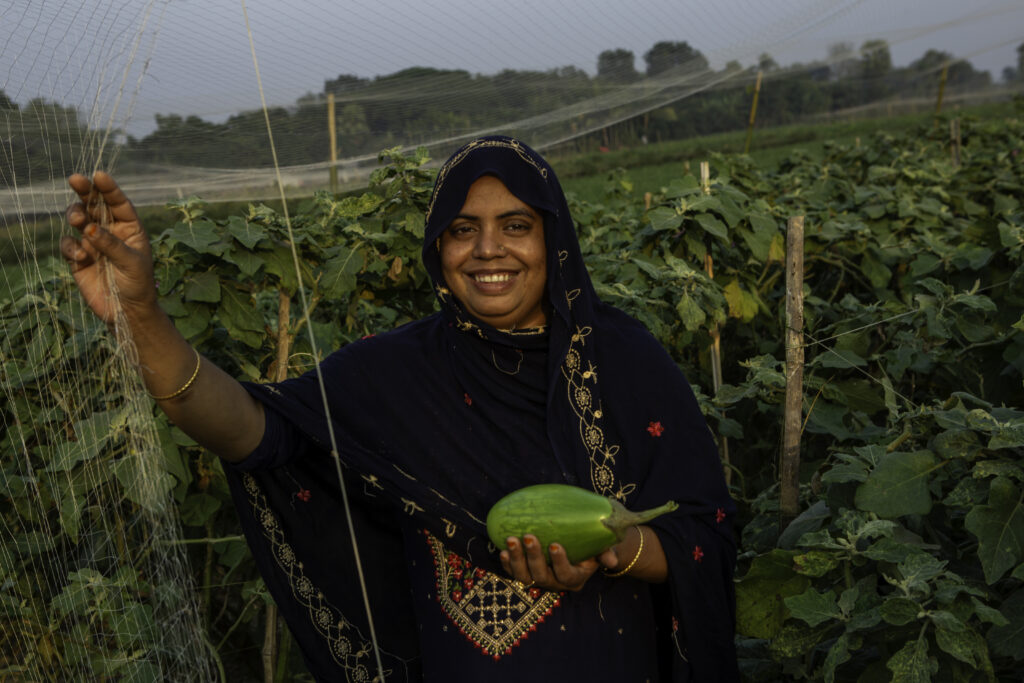
Reksona Khatun harvests eggplant on her farm in Doherpara village, Bangladesh. Photo by Heifer International/Russell Powell.
When exporters cited high transport costs as a barrier to offering good prices, farmers — demonstrating the power of their collective voice — raised their concerns and declined the proposed arrangement. To bridge the gap, Heifer facilitated a collaboration with the Bangladesh Agricultural Development Corporation (BADC). By leveraging BADC’s cooling vans, logistics costs were reduced, enabling exporters to remain profitable while farmers secured better prices. This solution improved export efficiency and strengthened government trust in Heifer and the farmers’ cooperative, which is now exploring ways to extend agricultural services to the other 75 Heifer-supported cooperatives and beyond.
Meanwhile, discussions with the Department of Agricultural Marketing (DAM) aim to develop aggregation centers at cooperative sites to remove systemic supply chain bottlenecks.
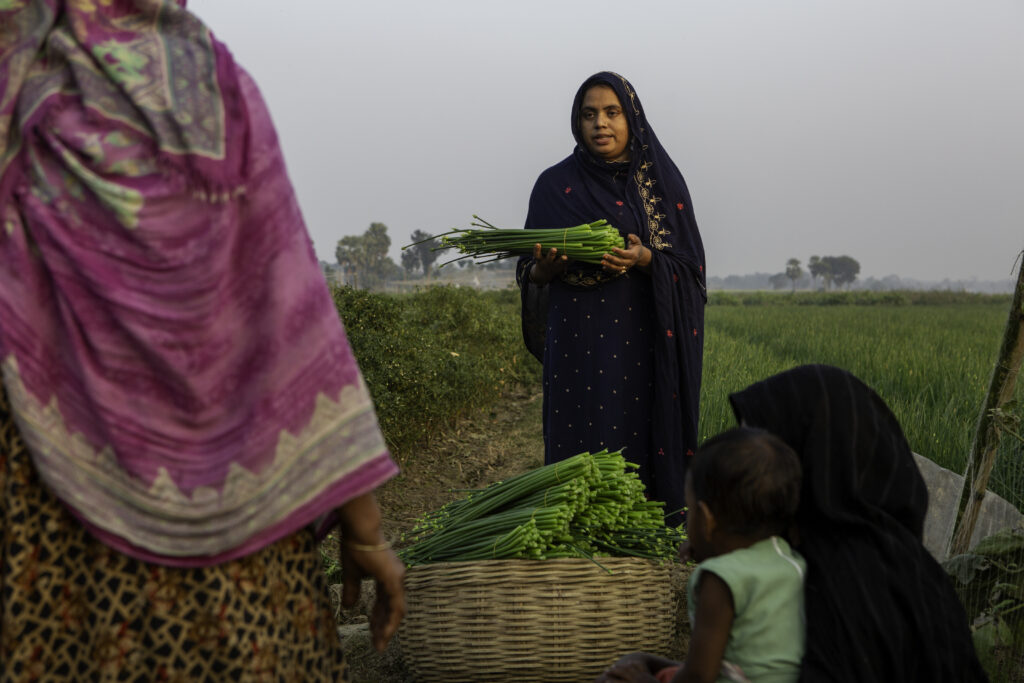
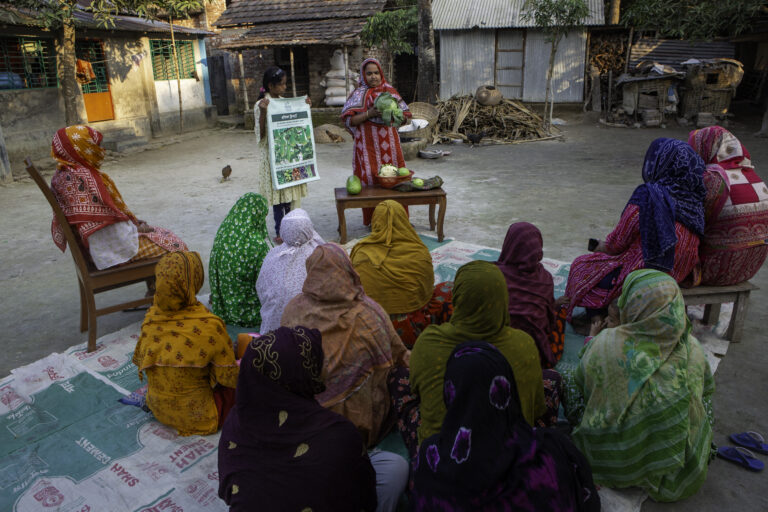
Reksona Khatun, center, leads a discussion with women in Doherpara village, Bangladesh. Photo by Heifer International/Russell Powell.
The impact extends well beyond agriculture. Women are stepping into public life as decision-makers and leaders. In communities where women were once sidelined, they are now leading cooperatives, negotiating prices and contributing to local planning. Cooperative members sit on advisory boards, collaborate with government officials and represent their communities in broader forums. Rural women are becoming visible, vocal and vital to local development. This is the power of the collective.
To further strengthen value chains, cooperatives are actively working with multiple government departments: with BADC for cold storage and transportation, DAM for market access, the Department of Agricultural Extension for production and market linkages, and the Soil Resource Development Institute for soil testing services.
The region’s vegetable export success is more than just a market achievement — it’s a testament to what rural women can accomplish with the right tools, partnerships and support. These farmers are not just growing crops; they are cultivating leadership, confidence and community transformation.
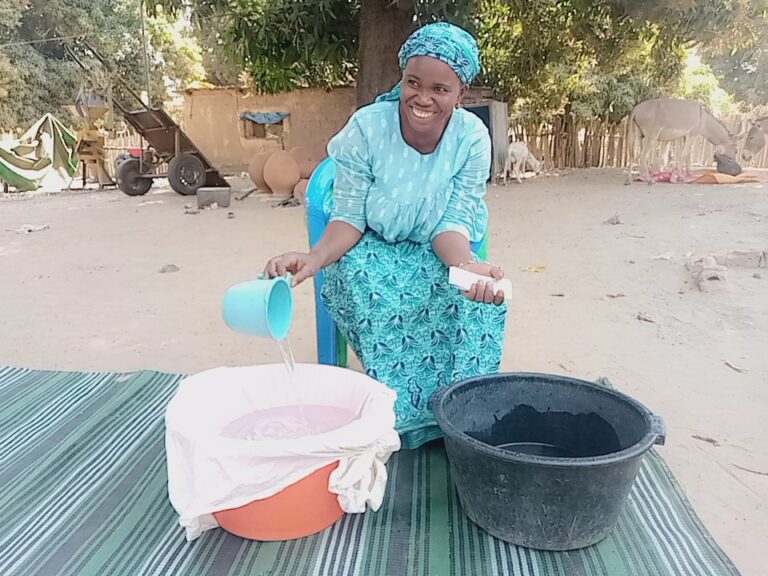
How a “Model Mother” is Bringing Women Together to Keep Children Healthy in Senegal
By Lyna Manga | May 5, 2026
In Aloutte Mandingue, Senegal, the day starts early, before the heat sets in and while household work is already underway. For Sounkary Seydi, 28, a mother of four, the morning is full — caring for her children, preparing food and tending to the home — before she steps beyond it to care for others.
Read more
Like many families in her village in the municipality of Diacounda, Sounkary depends on small-scale farming. What they grow often determines what they eat. Rainfall is unreliable, and when harvests fall short or income tightens, meals narrow to what is available, often basic staples like rice, millet and maize that fill the stomach but do not always provide enough nourishment.
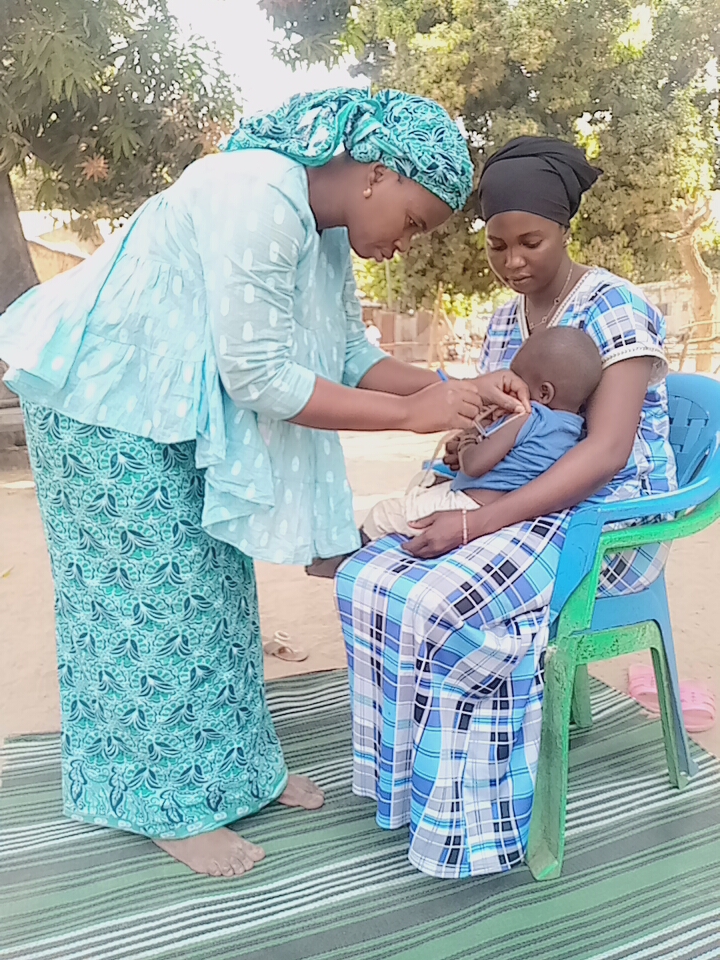 Sounkary Seydi, left, measures a child’s arm to check for early signs of malnutrition. Photo by Heifer International/Younoussa Mballo.
In this setting, a child’s health can decline rapidly. A full stomach does not always mean proper nutrition, and water may be close but not always safe to drink. Illness, especially diarrhea, drains what little the body holds, and a child can lose weight in days.
For years, Sounkary said, families lived with that instability. Hygiene was inconsistent, and malnutrition was common, especially among children and breastfeeding women. Many mothers lacked clear guidance on feeding practices or early warning signs when a child’s health was declining. Even when nutritious foods were available, they were not always given to children first. In those days, nearly 1 in 20 children in the area were affected by acute malnutrition.
“Before the start of the KAYRA project, our village was facing serious hygiene and malnutrition challenges,” Sounkary said, referencing a Heifer Senegal initiative focused on improving child nutrition through community-led support. “We had no structured organization to address these issues. Our neighborhoods and households were poorly maintained, and children’s health was deteriorating. The arrival of the KAYRA project changed everything.”
Through KAYRA, Sounkary became one of the village’s Model Mothers — a role defined by trust and responsibility. Model Mothers are not outsiders or specialists. They are women from the community, known for how they care for their own children and their willingness to help others.
The concept took shape as women gathered and spoke openly about children losing weight, recurring illness and what to do next.
“As a Model Mother, I am committed to sustaining these activities even after the project ends. We have learned to be autonomous and responsible.”
— Sounkary Seydi, Model Mother
Through the project, Sounkary and others received training in nutrition, hygiene, growth monitoring and food preparation. They practiced together, and then began applying what they learned in their own homes and passing it on to others across the village.
The KAYRA project closed in 2025, but today the work continues. Sounkary and others still meet with mothers regularly, sharing what they have learned and walking through feeding practices, handwashing and safe food preparation. They teach families to spot early signs of malnutrition and know when to act.
At group gatherings, Model Mothers measure children’s arms with a color-coded mid-upper arm circumference (MUAC) band to monitor children’s growth. Screening now reaches more children than before, rising from about 68 percent to more than 83 percent. When concerns appear, mothers respond quickly. Some children receive care at home with nutrient-rich porridge, while others are referred to local health facilities before their situation worsens.
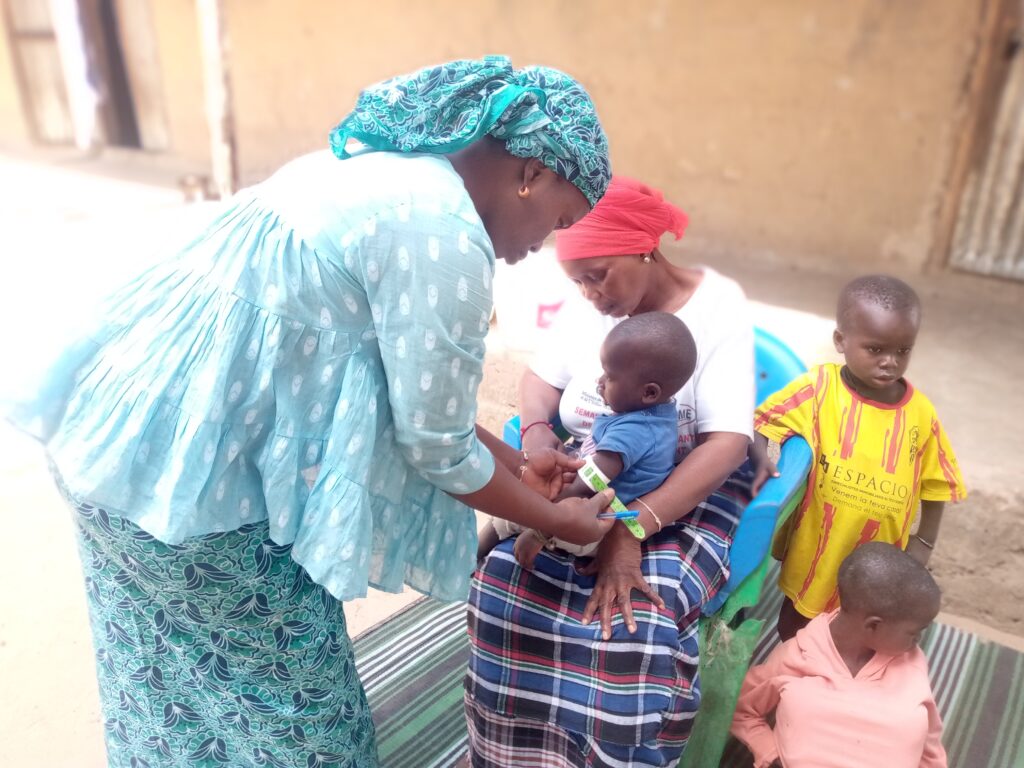
During a home visit in Diacounda, Sounkary, left, checks a child’s growth while speaking with the family. Photo by Heifer International/Younoussa Mballo.
“Today, I am proud to say that behaviors have changed,” Sounkary said. “Women are more aware of health and nutrition issues and are actively involved in prevention.”
The impact extends beyond individual households. Under the leadership of Sounkary and nearly 30 other Model Mothers, the community built a granary stocked with locally grown crops. Families contribute what they can — millet, rice, sorghum — creating a collective reserve. The flour prepared from these grains becomes porridge, a steady source of nutrition for children. Across communities, similar efforts have brought together more than 50,000 kilograms of crops.
Many of these same women also take part in village savings-and-loan groups, setting aside small amounts of money each week and accessing loans when needed. This allows families to pay for food, medical care and other essentials that support children’s health.
At home, gardens have taken root and meals include more variety. Across the village, women organize weekly clean-up days, restoring shared spaces and creating a cleaner, healthier environment for their children.
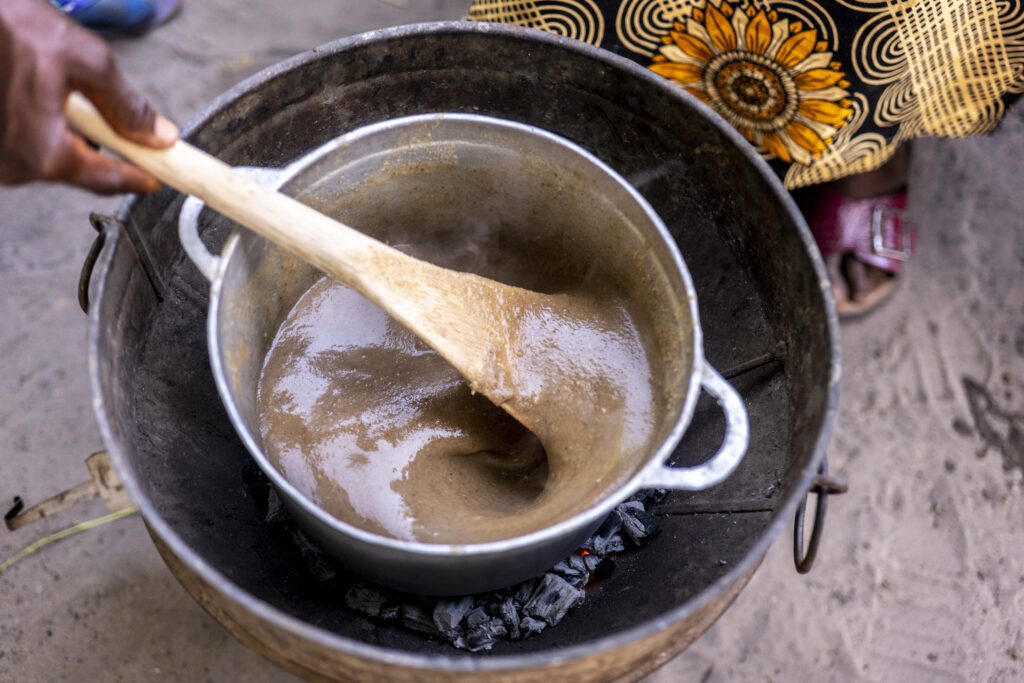
A fortified porridge made from local grains provides key nutrients for young children in Aloutte Mandingue, Senegal. Photo by Heifer International/Sylvain Cherkaoui.
Inside the home, small changes carry weight, from making water safe to drink to preparing meals with greater care and using iodized salt, which helps children get vital nutrients.
The difference is visible in families too. In some households, men have begun to take a more active role in bringing children to health visits or stepping in when women have other obligations.
Over time, malnutrition rates in the area have fallen from 4.5 percent to 2 percent.
“I cannot conclude without sincerely thanking the KAYRA project for the changes it has brought to our households,” Sounkary said. “Thanks to KAYRA, our children are growing up healthier, and our communities are living in a cleaner and safer environment.”
“As a Model Mother, I am committed to sustaining these activities even after the project ends. We have learned to be autonomous and responsible,” she said.
With Solar Power, a Poultry Entrepreneur in Nigeria Restores Her Dignity
By Onyekachi Ayevbuomwan | April 2, 2026
In poultry-farming communities across Edo State, Nigeria, the potential of women entrepreneurs has long been constrained by a systemic barrier: unreliable electricity. For Christabel Omoba, a determined poultry entrepreneur, an unstable power supply was more than a daily inconvenience; it was a constant threat to her family’s food security and her hard-won independence.
Read more
“In the poultry business, the cold chain is the lifeline,” Christabel said. “Without consistent power, chicken spoils and profits disappear.” The constant risk of spoilage turned every investment into a gamble, with her children’s future at stake.
Christabel changed her family’s trajectory when she joined Heifer Nigeria’s In-Power Her initiative, a poultry value chain project under the Naija Unlock signature program. The initiative helps women grow income, expand their businesses and strengthen household well-being.
Through an innovative hub-and-spoke model, it places solar-powered technology directly into the hands of women. In this model, Christabel operates as a hub, using a high-capacity, solar-powered freezer to store large volumes of poultry safely. She supplies youth and other women who distribute fresh products throughout the community using insulated carts.
They collect products directly from her shop, where she offers a reliable supply at a reduced price. Because her poultry stays fresh longer, they can also return unsold products, reducing their risk of financial loss.

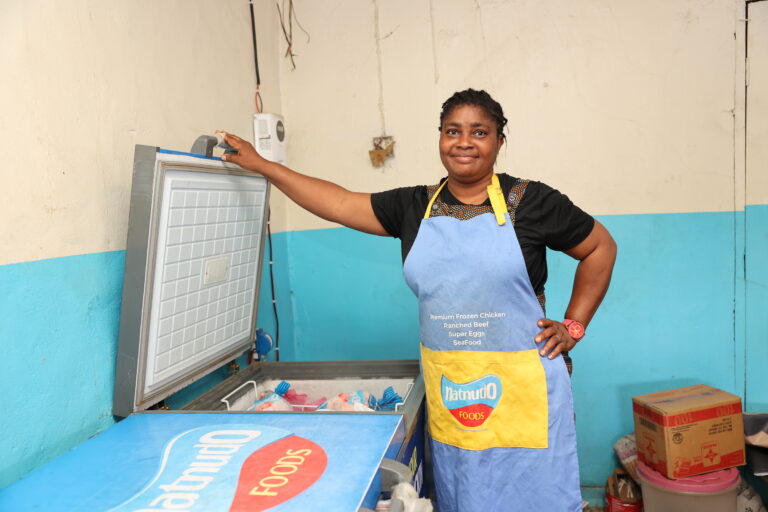
Christabel lifts a frozen chicken from her solar-powered freezer. Photo courtesy of Heifer Nigeria.
At the center of her transformation is a solar-powered freezer, financed through Heifer’s In-Power Her project. It operates entirely off-grid, with batteries that store energy and keep the freezer running consistently.
No longer dependent on expensive generator fuel or the unpredictability of the national power supply, Christabel can now preserve her poultry products with confidence and consistency. With access to this model, she can buy products at a favorable rate, stock more at once and reduce costs related to transportation, fuel and spoilage.
Reliable solar energy has allowed Christabel to grow her business steadily. Customers increasingly seek her products, confident in their freshness and quality. Many even ask whether she relies on the National Electric Power Authority (NEPA) — Nigeria’s national electricity provider — to keep her poultry cold.
“When I bring out chicken to sell,” she says, “customers often ask, ‘Madam, are you using NEPA light to cool this chicken?’”
For Christabel, the impact of the In-Power Her initiative is measured in more than financial returns; it is reflected in the stability and dignity it has restored to her household. With dependable energy, she can plan her days with confidence and manage her business without constant anxiety. She is no longer simply participating in the market; she is leading it as well.
“I feel privileged to have this freezer,” Christabel says. “It is not something I could have afforded on my own. I feel empowered.”
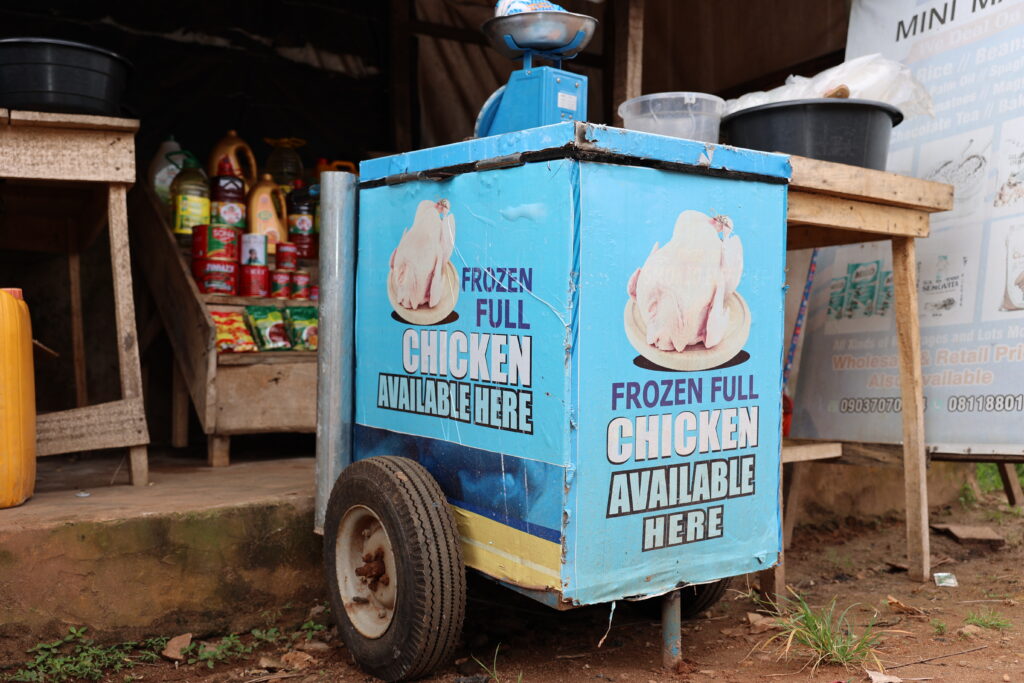
Insulated carts carry poultry from Christabel’s shop to customers across the community. Photo courtesy of Heifer Nigeria.
That empowerment extends beyond her business. With a steady income, Christabel can now ensure that her family has nutritious meals and her children’s school fees are paid on time. Her success has also strengthened household dynamics, earning her increased respect and support from her husband, who proudly tells her, “My wife, you are doing well.”
As she continues to grow her business, Christabel is not only securing her family’s future but inspiring her community.
From the solar-powered freezer at the center of her business to her fresh products reaching local households, Christabel has become a visible example of success for other women in Edo State. With her mastery of the hub-and-spoke approach, she is demonstrating how sustainable technology can unlock pathways from vulnerability to prosperity — for her neighbors and the next generation.
Finding Her Voice in Poultry Farming: The Journey of a Cambodian Woman Farmer
By Sophea Uth | July 29, 2026
As the world marks the International Year of the Woman Farmer, the story of Chin Tola from Cambodia’s Kampong Thom province reminds us that when women farmers are equipped with knowledge, skills and collective support, they become drivers of resilient food systems and rural transformation.
Read more
Across Cambodia, backyard chickens help families put food on the table, earn extra income and weather unexpected financial challenges. Yet for many smallholder farmers, especially women, raising healthy flocks remains difficult. Limited access to technical training, animal health services and reliable markets leaves even experienced farmers vulnerable to disease, financial losses and unstable incomes.
Through Heifer International’s Poultry Project of National Pride in Cambodia, farmers receive specialized training, including guidance on poultry health and flock management, along with access to capital and stronger market connections to build profitable poultry businesses. For Tola, those opportunities became the foundation for her journey from struggling chicken producer to respected trainer and cooperative leader.
Like many women farmers across Cambodia, Tola began relying on traditional chicken-rearing practices passed down through generations. While rooted in local knowledge, these methods offered limited protection against disease. “I did not have the technical knowledge to care for my chickens properly, and my flock often suffered from infectious diseases,” she said.
Her turning point came in 2018, when she joined a self-help group through a cooperative supported by Heifer International Cambodia. For Tola, this was more than an opportunity to improve production; it was an entry point into learning, leadership and collective action. Through targeted training provided by Heifer International Cambodia in poultry health, disease prevention and flock management, she began transitioning from subsistence-oriented practices to a knowledge-based, market-driven farming model.
“The training changed everything,” Tola said. “Since gaining knowledge from the project, my chickens have remained free from diseases.” She adopted improved practices such as systematic vaccination against fowl cholera, Newcastle disease and Gumboro disease, along with timely booster doses. She also improved feed quality by providing vitamin-rich supplements and integrating fodder grass and Azolla, a nutrient-rich aquatic plant, into her chickens’ diet. Together, these practices significantly improved productivity and resilience.
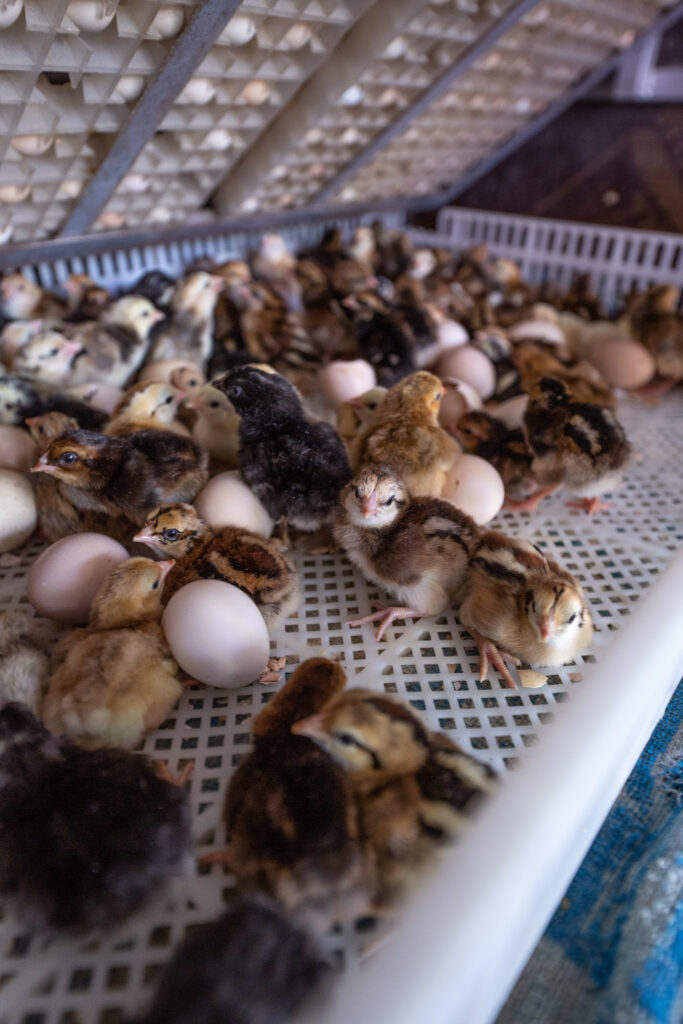
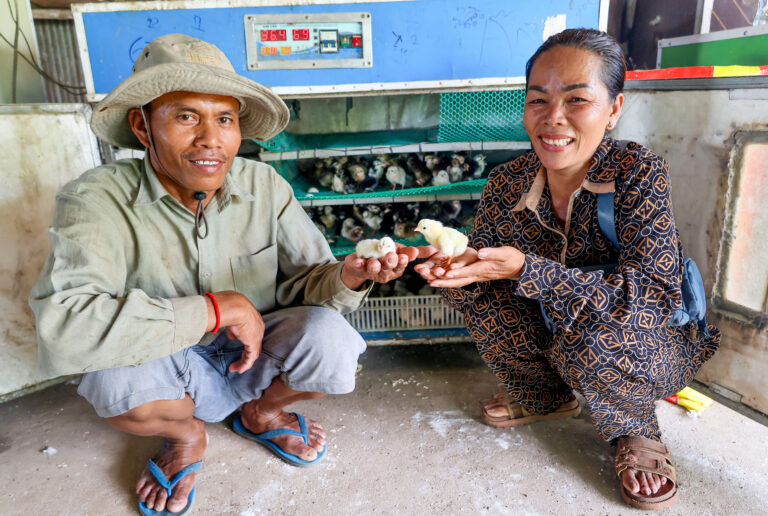
Newly hatched chicks rest in an incubator at a modern chick hatchery enterprise, one of the key infrastructure investments of the Poultry Project of National Pride in Cambodia. Photo by Heifer International/Phillip Davis.
Today, Tola manages a thriving flock of 200 parent stock chickens and sells approximately 1,200 chicks every month to fellow cooperative members. Before joining the cooperative, she earned no income from poultry and relied on rice farming alone. Her monthly income now ranges from $250 to $1,000 in chick sales, with an additional $500 from fattening chickens. This financial stability has enabled her to provide for her family and invest in her child’s education.
Tola’s impact extends far beyond her own farm. After receiving training from Heifer International Cambodia, she became a local poultry trainer, passing along the same knowledge that helped transform her own business. She regularly trains fellow cooperative members, sharing practical guidance on disease prevention and sustainable native chicken production. “I teach farmers how to raise chickens in a way that keeps them healthy and productive,” she said. So far, she has trained approximately 120 cooperative members. In doing so, she has become a trusted resource in her community, strengthening local capacity and collective resilience.
Looking ahead, Tola plans to expand her parent stock from 200 to 500 chickens — a goal that reflects her growing confidence as a poultry farmer, business owner and community leader.
About Heifer’s Work in Cambodia
Through the Poultry Project of National Pride in Cambodia, Heifer International works with cooperatives and rural communities to strengthen Cambodia’s poultry sector. By expanding access to technical training, market opportunities and modern poultry infrastructure, the project helps smallholder farmers raise healthier flocks, grow profitable poultry businesses and build more secure livelihoods. The project reaches communities across 11 provinces.
“My mother has gone through a lot of struggles in past and now she has become self-dependent… That’s why I want to thank you.”
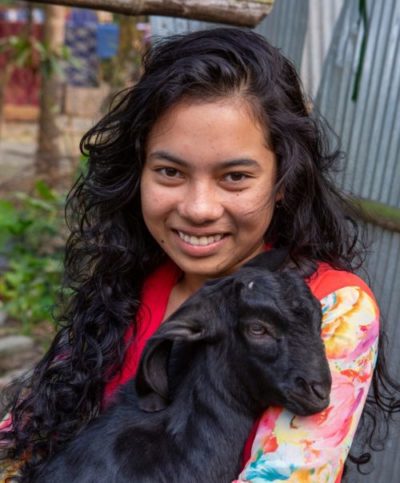
Because of programs in her area, Keya’s mother was able to receive support and training from Heifer. With that training and support, she started her own dairy and poultry farming.
Not long afterwards, she took the valuable lessons she learned from her time with Heifer and opened a savings account for her daughter. Keya’s mother continues to earn enough from her business to afford Keya’s school fees and a tutor.
It’s been valuable for Keya to watch her mother’s growth. Because she saw her mother provide for their family and become a leader in their community, Keya now hopes to continue in her footsteps and help others.
Thanks to her mother’s hard work and support from incredible people like you, there is no telling what Keya will be able to accomplish — or how many others like her will have a better future.
Your gift not only benefits farmers and their communities, but also provides specific advantages for you. For example:
- Most gifts cost you nothing now.
- Many gifts pay you income.
- With most gifts, you are not obligated in any way when you give and you can change your beneficiaries at any time.
- You can give a gift of any amount – whatever is right for you. With the exception of trusts and annuities, there are no minimum amounts required.
Your support will ensure that together, we can continue to accomplish Heifer’s vision to end hunger, sustain communities, and help families pass on the Gift of poverty-ending education and empowerment.
Shared Vision
We know that people like you are committed to making the world a better place for generations to come. And, we at Heifer Foundation join you in that commitment by raising and overseeing financial assets to support the work of Heifer International.
By collaborating with Heifer Foundation, you and supporters like you will help Heifer International:
- Transform communities by providing resources that promote socially sustainable values and activities.
From Cup To Cow: Cultivating Generations Of Hope For The Future
In 1938, an Ohio farmer named Dan West was directing a milk distribution to hungry refugee children when he thought, “They don’t need a cup. They need a cow.”
Six years later, West founded Heifer Project International, a charity working to end hunger and poverty and protect the earth. In the decades since, Heifer has helped 15.5 million families in more than 125 countries improve their quality of life and move toward greater self-reliance.
In 1991, Heifer International’s Board of Directors created Heifer Foundation, a separate nonprofit organization whose mission is to create, manage, and grow an endowment to secure Heifer’s ability to continue its mission well into the future.
Your investment in Heifer Foundation or Heifer International is an investment in bringing help and hope where it is needed most. Joining our supporters will help cultivate long-term, annual support for Heifer International’s work worldwide, touching the lives of millions of people in need.
Easy Ways to Make a Lasting Impact

Gifts That Cost You Nothing Now

Gifts That Reduce Your Taxes

Gifts That Pay You An Income

Gifts That Make An Impact Now
COMPLIMENTARY PLANNING RESOURCES ARE JUST A CLICK AWAY!